
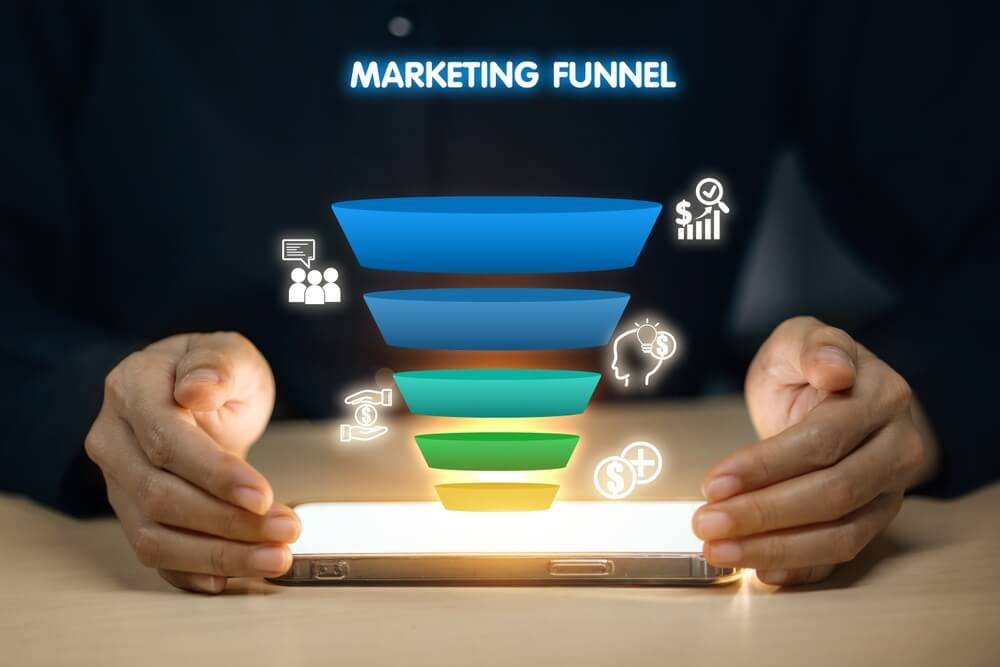
A lot of business marketing advice you’ll read (including some on this site) treats conversion as a slow burn. Map the journey, nurture the lead, touch the prospect seven times before you ask for the sale. That’s all well and good, if you have the runway. But if you want to really throttle up your revenue, you need your funnel to deliver ready-to-buy customers. Immediate conversions. The problem is, most businesses aren’t built to serve them. Most funnels aren’t built to capture them.
Audit your conversion path before you touch anything else
The first thing you need to do is not to add something but instead to remove everything that creates distance from what you want to happen.
You need to do this from the bottom of the funnel, upwards. See how many steps separate someone who wants to buy or convert from the process of doing so. Every additional field, click, or page is an opportunity for the person to change their mind. Remove all unnecessary steps from the checkout process. Remove fields from your lead form. Remove any piece of information that doesn’t directly contribute to understanding whether a visitor is likely to become a customer. Friction isn’t as evident as it seems. It’s not just a form asking for too much information. It could be a slow page, a poorly designed call to action, or a lack of trust in your visitor. Run through your entire conversion funnel and count the times that you hesitate. That’s the amount of revenue you’re leaving on the table.
Shift budget toward traffic that already has intent
While broad awareness campaigns are beneficial, they are costly and not designed to deliver quick results. If conversions are your priority, you’ll want to ensure your ads are seen by potential customers who are ready to buy even before they see them. This means reallocating some of your upper-funnel ad spend to sources of traffic that exhibit purchase intent.


Instead of using the not-quite-so-efficient-anymore marvels of modern technology, more advertisers are choosing ad platforms for direct traffic that place ads on the sites of premium publishers, where interested and ripe audiences interact with content. When the quantity of those ready to buy goes up, the cost of missed opportunities goes down. A few potential customers who are ready to buy are far more valuable than a bunch of people killing time with their devices on the couch.
Message match is not optional
Many times, high-intent traffic doesn’t convert for this simple reason: The landing experience doesn’t fully reflect the ad that drove the traffic.
An ad promises 20% off the customer’s first order, leads to the homepage, the discount isn’t obvious, and the customer leaves.
An ad promises a demo, the ad leads to a generic features page, there’s no clear CTA for the demo, the customer leaves.
You blew your message match and lost low-funnel traffic unnecessarily, consigning them to scrolling around the site to hunt for the offer that motivated their click, or just bouncing back to Google to check out a competitor.
An untold number of would-be customers have left your site because you did a poor job of converting their existing high intent by presenting them with an engaging, personalized, irresistible offer that matched the motivating offer in the ad that brought them there.
Use time and scarcity to compress the decision window
The majority of prospects who don’t buy during their first visit never return. Retargeting converts some of them, but if you could make the sale when the customer’s interest is highest, that’s the way to go, right?
Creating urgency can get visitors to buy right away. So can making your offer really, really good. We covered how to make a better offer in a previous chapter, so let’s take a look at urgency. What can you do to push a visitor to make a decision now, while they’re on your site, rather than waiting until… maybe never?
For starters, realize that urgent offers only work if the urgency is real.
Technical performance is part of the funnel
A website that loads within a second can generate conversions at a higher rate than a site which takes five times longer to load, it’s just common sense. This isn’t a slight advantage; it’s the difference between a funnel that performs and one that only consumes your marketing spend.
The expectations are even greater for the mobile funnel. Most of your highest-velocity conversions will come via a phone. Mobile customers are also the least likely to tolerate slow load times, awkward navigation, and multi-screen purchase paths. One-touch ordering, forms that populate with a click on any device, and load times of under two seconds should be your starting points when designing the mobile funnel.
The speed of your site is a marketing feature. Act on this.
The shortcut isn’t a shortcut – it’s a different design
Designing for immediate conversions doesn’t imply the absence of strategy. It means making deliberate choices, cleaner pages, better traffic, matched messaging, and no unnecessary steps between intent and action. Once that structure is in place, the funnel does the job in just one visit.
